It’s the Humidity: How International Researchers in Poland, Deep Learning and NVIDIA GPUs Could Change the Forecast
For more than a century, meteorologists have chased storms with chalkboards, equations, and now, supercomputers.
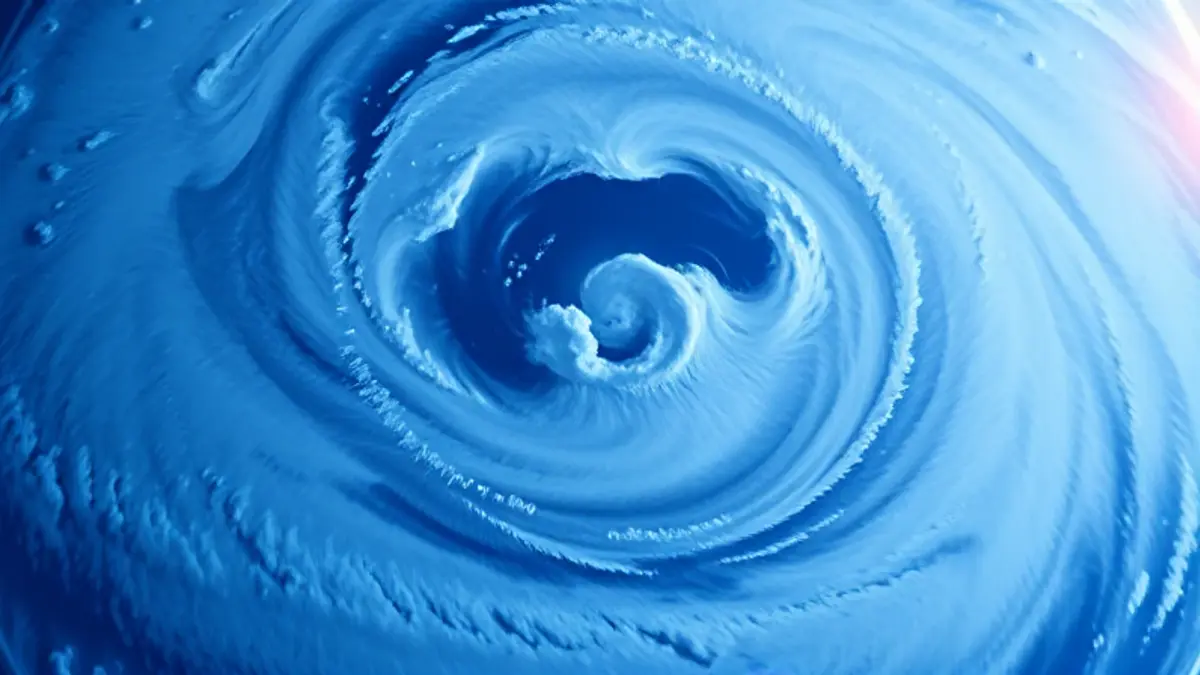
- For more than a century, meteorologists have chased storms with chalkboards, equations, and now, supercomputers.
- 02 SRGAN Upscaling An NVIDIA GPU-powered deep learning model sharpens low-res humidity readings into 3D maps.
- 03 Explainable AI Grad-CAM and SHAP show forecasters exactly where the model focuses its attention.
For more than a century, meteorologists have chased storms with chalkboards, equations, and now, supercomputers. But for all the progress, they still stumble over one deceptively simple ingredient: water vapor. Humidity is the invisible fuel for thunderstorms, flash floods, and hurricanes. It’s the difference between a passing sprinkle and a summer downpour that sends you sprinting for cover. And until now, satellites have struggled to capture it with the detail needed to warn us before skies crack open. A team from the Wrocław University of Environmental and Life Sciences (UPWr) may help change that. In a paper published this month in Satellite Navigation, researchers describe how deep learning can transform blurry global navigation satellite system (GNSS)-based snapshots of the atmosphere into sharp 3D maps of humidity, revealing the hidden swirls that shape local weather. The secret? A super-resolution generative adversarial network (SRGAN) — a kind of AI best known for making grainy photos look crisp. Instead of celebrities or landscapes, researchers trained the network on global weather data, powered by NVIDIA GPUs. The result: low-resolution readings from navigation satellites get “upscaled” into high-resolution humidity maps with far fewer errors. 62% Poland reduction in forecast errors 52% California error reduction, even in rainy conditions Compared with older methods that smeared details into a watercolor blur, the AI produced sharp gradients that actually matched what ground instruments saw. And because weather prediction is as much about trust as accuracy, the team added a twist: explainable AI. Using visualization tools like Grad-CAM and SHAP, they demonstrated where the model “looked” when making decisions. The AI’s gaze landed, reassuringly, on storm-prone areas — Poland’s western borders, California’s coastal mountains — exactly where forecasters know the atmosphere can turn nasty. “ “High-resolution, reliable humidity data is the missing link in forecasting the kind of weather that disrupts lives. Our approach doesn’t just sharpen GNSS tomography — it also shows us how the model makes its decisions. That transparency is critical for building trust as AI enters weather forecasting.” — Saeid Haji-Aghajany, Assistant Professor, Wrocław University of Environmental and Life Sciences How it works 01 GNSS Signals Navigation satellites passively sense water vapor as signals pass through the atmosphere. 02 SRGAN Upscaling An NVIDIA GPU-powered deep learning model sharpens low-res humidity readings into 3D maps. 03 Explainable AI Grad-CAM and SHAP show forecasters exactly where the model focuses its attention. The implications could be enormous. Feed these sharper humidity fields into physics-based or AI-driven weather models, and you get forecasts that can catch sudden downpours or flash floods before they hit. Communities living under skies that turn dangerous in minutes could gain crucial lead time. The bottom line Not the thunder. Not the lightning. It’s the humidity. Reference: DOI: 10.1186/s43020-025-00177-6
Sources
Related stories

Aleph Alpha Releases Kolibri-1, an Open German Reasoning Model With 1M-Token Context
Subtopic Mixture Of Experts · Long Context Takeaways − Kolibri-1 is a 78B MoE with 3.46B active parameters, Apache 2.0, German and English focus. Context window validated up to 1,048,576 tokens, native 262,144, no position scaling tricks required.
Red Hat Shrinks Nemotron 3.5 Lightning's 30B Agent Model by Half With FP8
Takeaways − Red Hat AI released an FP8 quantized build of NVIDIA Nemotron 3.5 Lightning 30B A3B. Cuts GPU memory and disk by roughly 50% versus the BF16 reference weights.
How NVIDIA GPUs Help Accelerate OpenAI’s GPT-6 Astra Ultrafast
GPT-6 Astra Ultrafast, running on NVIDIA Blackwell GPUs, is available now in the OpenAI API and to eligible ChatGPT Work and Codex users.

Fine-Tuning NVIDIA Nemotron for Saudi Arabic Dialects, with a Path to Other Languages
Fine-Tuning NVIDIA Nemotron for Saudi Arabic Dialects, with a Path to Other Languages | NVIDIA Technical Blog Fine-Tuning NVIDIA Nemotron for Saudi Arabic Dialects, with a Path to Other Languages By Imane Khaouja , Amine El Khair , Meshari Alaeena , Zahra Al-Kaf and Abdulrahman Alkhamees NVIDIA Nemotron 3.5 ASR supports multilingual streaming transcription across 40 language-locales, but deployment-specific dialects...