Meta open sources code to let you make Muse AI gadgets
Meta now lets you make your own Muse gadgets that feature the company's new AI agent with code that the company open sourced.
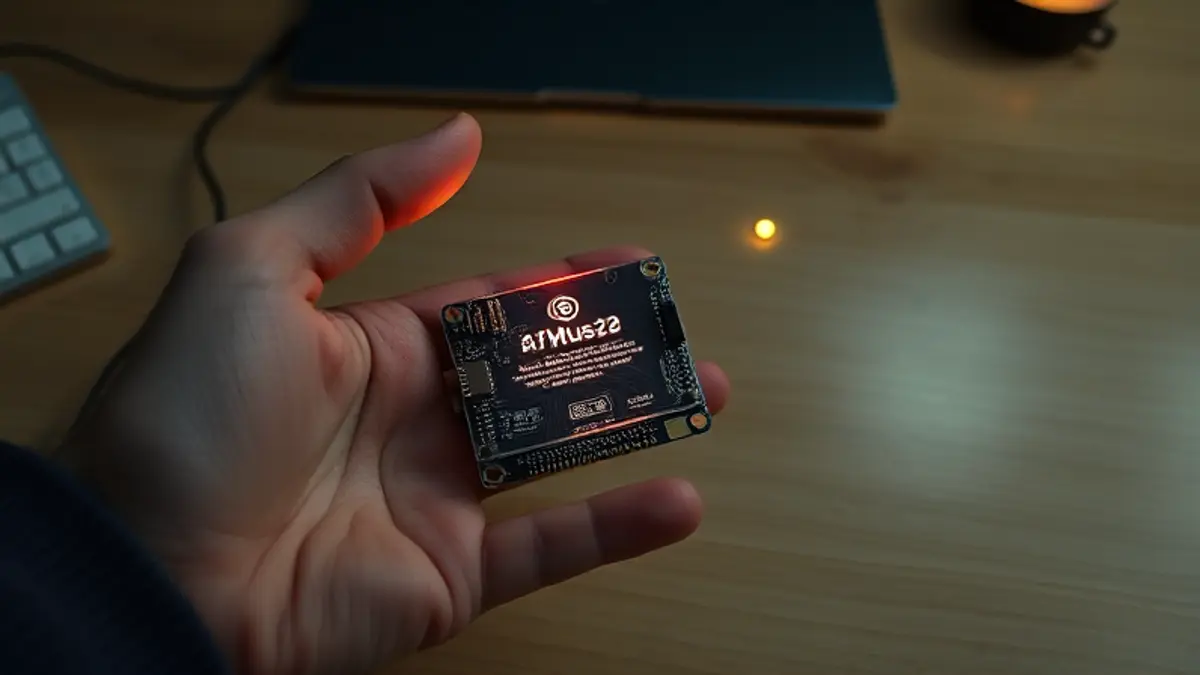
- Meta now lets you make your own Muse gadgets that feature the company's new AI agent with code that the company open sourced.
- "Muse gadgets are open source devices you build yourself," Meta says.
- "Program an off-the-shelf ESP32 board or set up a Raspberry Pi with our SDKs, then connect Muse to your displays, buttons, sensors, actuators, and whatever else you've got lying on your workbench.
Meta now lets you make your own Muse gadgets that feature the company's new AI agent with code that the company open sourced. The company suggests projects like loading Muse on a color E Ink display to show reminders, adding it to an HDMI stick so you can display Muse on a big screen, or putting Muse on a small touchscreen device to make what looks kind of like a DIY Muse Charm. "Muse gadgets are open source devices you build yourself," Meta says. "Program an off-the-shelf ESP32 board or set up a Raspberry Pi with our SDKs, then connect Muse to your displays, buttons, sensors, actuators, and whatever else you've got lying on your workbench. … Read the full story at The Verge.
Sources
Related stories

Google froze its open source bug bounty program due to a ‘significant rise’ in AI submissions
Google froze its open source bug bounty program due to a significant rise in AI submissions | TechCrunch Last day to exhibit your breakthrough to 10,000+ tech leaders at Disrupt is on Oct 2 . Book Exhibit Table Now.
NASA and IBM's open source lunar model turns 17 years of orbiter data into a foundation for lunar science
NASA and IBM's open source lunar model turns 17 years of orbiter data into a foundation for lunar science The NASA-IBM Lunar Foundation Model makes decades of lunar observation data usable for machine learning. It's especially strong at predicting ice deposits at the poles and detecting craters.
FlashML Runs MiniMax H3 Video AI on 8 GB Consumer GPUs
Takeaways − FlashML-org released FreeVideo , a local inference engine for MiniMax H3 video generation. Runs in 8 GB VRAM and 16 GB RAM via aggressive weight offloading and streaming.

The Agent Said It Was Done. The Database Disagreed.
The Agent Said It Was Done. The Database Disagreed. The Agent Said It Was Done. The Database Disagreed. Microsoft ThinkingBox grades AI agents on the records they leave behind, not the sentences they generate, and then asks whether they can do it twenty times in a row.