Single-Phase Direct Liquid Cooling Is Proven for the Next Decade of Ultra-Dense Compute
Download this complimentary White Paper today! This White Paper provides a comprehensive overview of how single-phase direct liquid cooling manages the rising thermal demands of AI and high-performance computing, and how it compares with two-phase and immersion approaches.
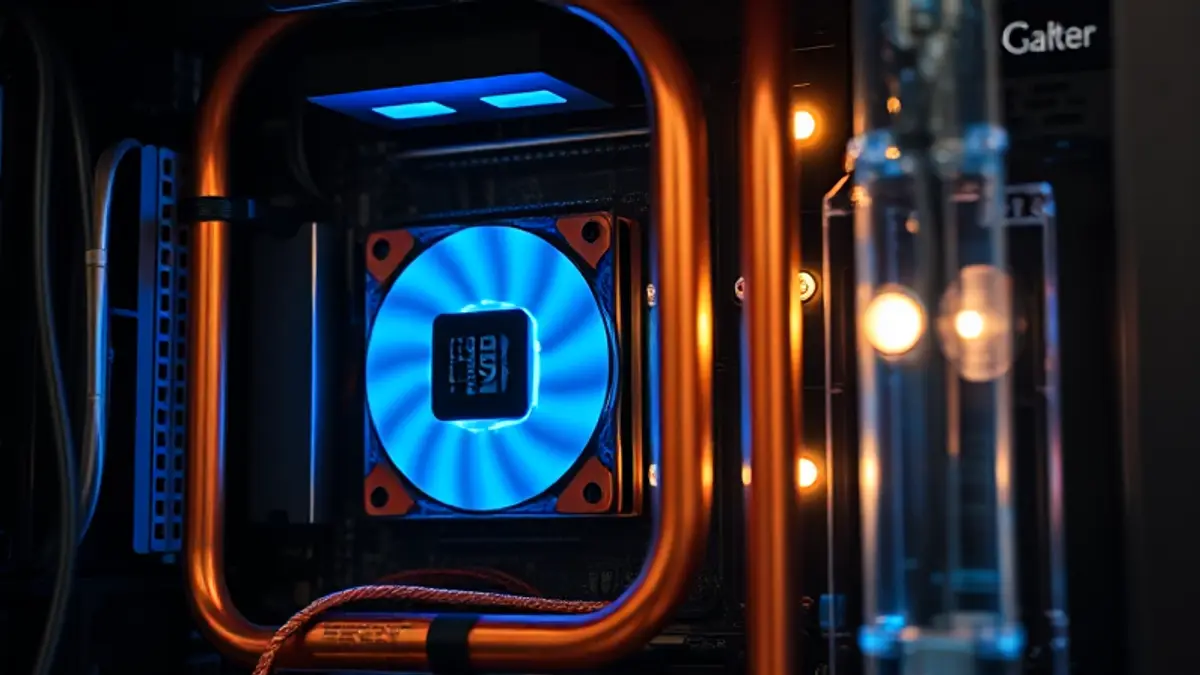
- This White Paper provides a comprehensive overview of how single-phase direct liquid cooling manages the rising thermal demands of AI and high-performance computing, and how it compares with two-phase and immersion approaches.
- Why rising compute density has made heat the central design constraint in AI and high-performance computing, where individual processors now exceed 1,000 watts and racks dissipate more than 100 kilowatts.
- Modern AI accelerators can dissipate well over 1,000 watts, and a single rack may release more than 100 kilowatts of heat.
Download this complimentary White Paper today! This White Paper provides a comprehensive overview of how single-phase direct liquid cooling manages the rising thermal demands of AI and high-performance computing, and how it compares with two-phase and immersion approaches. Why rising compute density has made heat the central design constraint in AI and high-performance computing, where individual processors now exceed 1,000 watts and racks dissipate more than 100 kilowatts. How semiconductors respond to excess heat through thermal throttling, and why maintaining thermal margin supports higher performance and longer hardware life. Why air cooling reaches its practical limit at high rack densities, and how liquid absorbs and carries away far more heat in a closed loop. How single-phase direct liquid cooling works at the chip and system levels, and how it compares with two-phase and immersion cooling. How processor power and rack density are expected to grow, and what these trends mean for the future of thermal design. Click LOOK INSIDE to download the PDF now. Presented by IEEE Spectrum and Wiley, sponsored by CoolIT Systems As computing systems move toward denser processors, tightly coupled server nodes, and higher-power racks, managing the heat they generate has become a defining challenge in data center design. Modern AI accelerators can dissipate well over 1,000 watts, and a single rack may release more than 100 kilowatts of heat. This is far beyond what air cooling can practically remove. Single-phase direct liquid cooling addresses this by circulating water or a water-glycol coolant through coldplates mounted directly on high-heat components. The coolant absorbs the heat and carries it away in a closed loop to a coolant distribution unit. Because liquid stores far more heat than air and removes it much faster, this approach supports higher chip and rack densities within a smaller footprint. This paper explains how single-phase direct liquid cooling works, how it compares with two-phase and immersion cooling, and how rising processor power and rack density are shaping the future of thermal First register your details to create a user profile for the hub, then login to access all content within the hub. Already registered? Click here to log in to the hub. IEEE Spectrum Magazine, the flagship publication of the IEEE, explores the development, applications and implications of new technologies. It anticipates trends in engineering, science, and technology, and provides a forum for understanding, discussion and leadership in these areas. Aerial Cable Systems for Substation Exit Construction 76% Faster Replication. Same Infrastructure. The Future of Electrification Service: 2026–2035+ 1. Same tier 3 topics + same partner [3],
Sources
Related stories

NVIDIA Opens Applications for 2027–2028 Graduate Fellowships With Awards Up to $60,000
Bringing together the world’s brightest minds and the latest accelerated computing technology leads to powerful breakthroughs that help tackle some of the…

Compressing Streaming Neural Audio Encoders via Latent-Space Distillation
Compressing Streaming Neural Audio Encoders via Latent-Space Distillation - Apple Machine Learning Research research area Methods and Algorithms , research area Speech and Natural Language Processing content type paper published September 2026 Compressing Streaming Neural Audio Encoders via Latent-Space Distillation Authors Prasanth Yadla‡, Mohammad Samragh Razlighi‡, Dongseong Hwang, Mingbin Xu, Yuanyuan Zhang, Chung-Cheng Chiu, Yongqiang Wang†**, Yuan Liu§**, Zhen Huang,...

Why Read a Research Paper When You Can Turn It Into an AI Agent?
Have you ever read a paper in Science or Nature and thought, “Man, that research was so cool.