With most information hidden, the game Stratego had stumped AI—until now
Deep Blue took down Garry Kasparov at chess in 1997, AlphaGo beat Lee Sedol at Go in 2016, and poker bots have been beating professionals for years.
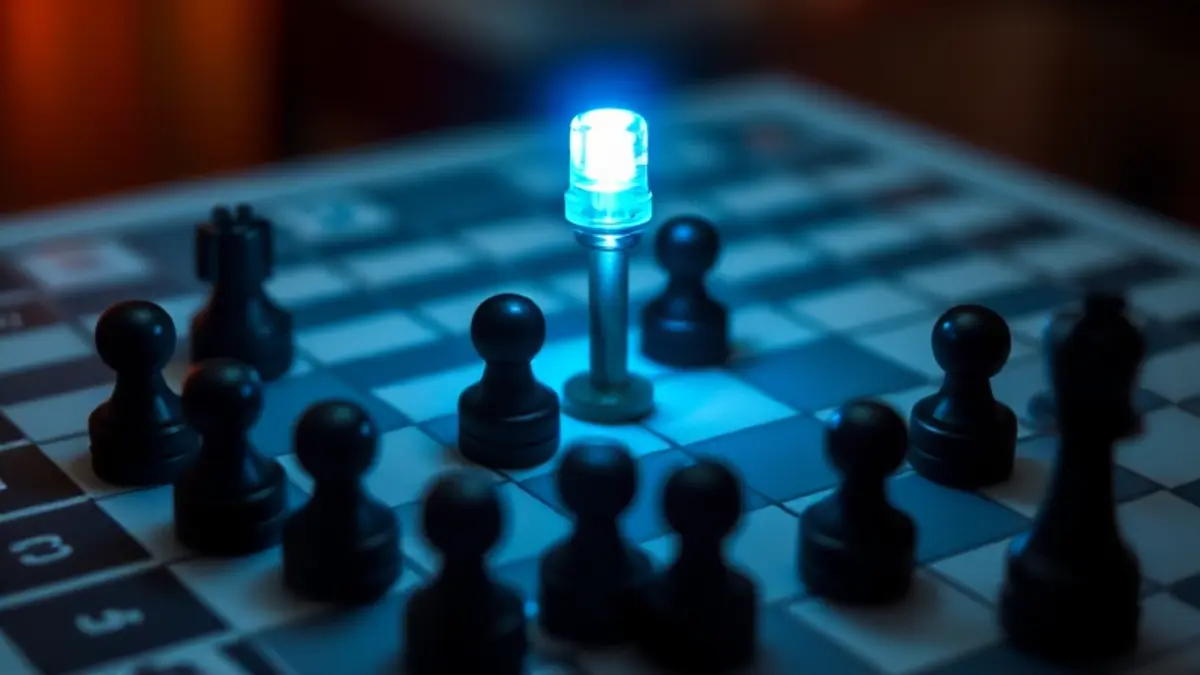
- Deep Blue took down Garry Kasparov at chess in 1997, AlphaGo beat Lee Sedol at Go in 2016, and poker bots have been beating professionals for years.
- Their AI, called Ataraxos, beat Pim Niemeijer, arguably the best Stratego player of all time, 15 games to one, with four draws.
- And it took just 16 GPUs and a few thousand dollars to train it.
Deep Blue took down Garry Kasparov at chess in 1997, AlphaGo beat Lee Sedol at Go in 2016, and poker bots have been beating professionals for years. But one classic game called Stratego held out. Even DeepMind, with its exceptional budget, couldn't build a machine that reliably beat the best human players. Now, a team of researchers from Carnegie Mellon, MIT, New York University, and Stanford University has done it. Their AI, called Ataraxos, beat Pim Niemeijer, arguably the best Stratego player of all time, 15 games to one, with four draws. And it took just 16 GPUs and a few thousand dollars to train it. Hidden armies In Stratego, each player gets 40 pieces representing military ranks, from a marshal down to a spy, plus bombs and a flag. You win by capturing the opponent's flag. Your opponent knows where your pieces are, but not what they are. Identities are revealed only when two pieces collide in battle—the weaker one is removed, and the identity of the winner is revealed. That makes Stratego an imperfect-information game, just like poker, which computers cracked years ago. “There's something super distinctive about Stratego, which is that it is a massive amount of hidden information that unfolds over a very long time scale,” said Eugene Vinitsky, a researcher at NYU and co-author of the study.Read full article Comments
Sources
Related stories
Vulnerabilities in AI Agents Expose Trust Gap Flaw
Google and other organizations have acknowledged vulnerabilities in their AI agents, which exploit trust gaps in the Model Context Protocol.

Trump’s Crazy AI Rebrand Was a Loyalty Test for Tech Execs—and It Worked
Seventy years ago last summer, a group of scientists met at Dartmouth College to discuss a wild idea—that machines might one day be capable of humanlike thought processes. One of those scientists, John McCarthy, had suggested a name for the new field: artificial intelligence .

Argon aims to return Google to the frontier
AI Argon aims to return Google to the frontier PLUS: How (and why) to set up Meta’s Muse Desktop Good morning, AI enthusiasts, and welcome to the 5,879 new readers who joined us yesterday.

Meta's Connect turns into a Muse takeover
AI Meta's Connect turns into a Muse takeover PLUS: Use Gemini Canvas to visualize Google Sheets Good morning, AI enthusiasts, and welcome to the 4,981 new readers who joined us yesterday. Meta’s viral Muse and its adorable mascot are everywhere right now, and they’re about to show up in two new places — on your face and in your hand.