NVIDIA Introduces AI Tools and New HPC GPU at SC26
NVIDIA unveiled new AI agent tools and the Rubin HPC GPU at SC26, enhancing research capabilities and computational efficiency.

What happened
At SC26, NVIDIA's Ian Buck introduced tools for AI agents that can plan experiments, execute code, and verify results on researchers' systems. These tools aim to streamline the research process by integrating planning and validation into a single workflow.
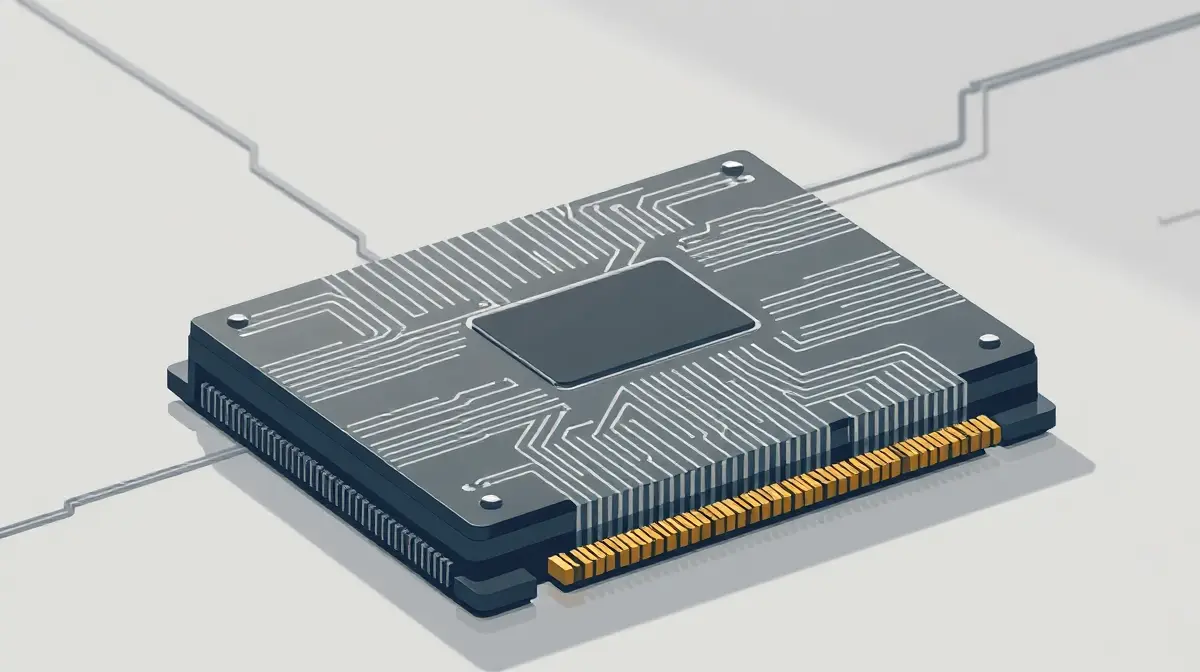
NVIDIA also announced the Rubin HPC GPU, part of the Vera Rubin platform, designed for science, engineering, analytics, and AI. This GPU is intended to support high-performance computing tasks with advanced precision and connectivity features.
Why it matters
The new AI tools and GPU represent significant advancements in research efficiency and computational power. By enabling AI agents to handle complex tasks, researchers can focus more on innovation rather than repetitive testing and validation.
Key details
The Rubin HPC GPU supports precisions from FP64 to FP4, includes sparse-data acceleration, and connects via seventh-generation NVIDIA NVLink. It also features over 50,000 CUDA cores, which is about three times as many as Hopper.
NVIDIA expanded its Vera CPU platform for high-performance computing, with DKRZ selecting Vera CPUs for its HLRE-5 supercomputer, set for early 2028. A simulation on Jülich’s JUPITER supercomputer demonstrated that magic state cultivation can reduce the operations needed for one logical step by tenfold.
Sources
Related stories

NVIDIA Expands CUDA-X Libraries for Scientific Research
NVIDIA has added new tools to its CUDA-X libraries to speed up scientific research across multiple domains.

Microsoft Introduces TokenEconomizer to Cut AI Coding Costs
Microsoft Research's TokenEconomizer plugin cuts costs by up to 30.9% across coding tasks without altering AI models.

NVIDIA's Vera Rubin Platform Sets MLPerf Training v6.1 Performance
NVIDIA's Vera Rubin platform achieved top results in MLPerf Training v6.1 benchmarks, outperforming previous systems.

Vercel Introduces Agent Evaluations for Better Task Accuracy
Vercel outlines methods to assess agent performance in completing user tasks accurately.

IBM Research Updates on Quantum Starling Progress
IBM Research shares updates on advancements in its quantum computing project, the Quantum Starling.
Meta Introduces TLX for GPU Optimization
Meta has released TLX, an extension to Triton, to improve GPU performance for machine learning workloads.