Cerebras Wafer-Scale Processor Designed for Longevity
Cerebras' wafer-scale processor is built to endure due to its physical construction.

What happened
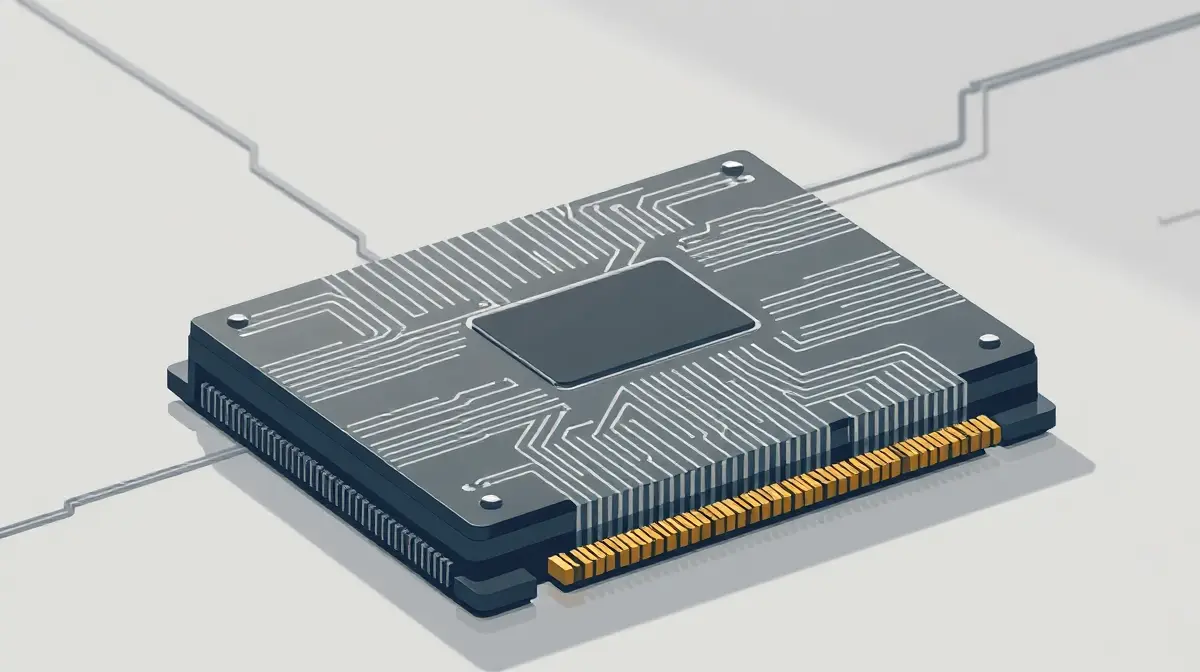
Cerebras developed a wafer-scale processor that is designed to last due to its physical construction. The company faced significant challenges in building the wafer-scale processor, requiring substantial resources and effort.
The wafer-scale design allows for a single chip to contain thousands of cores, enabling massive parallel processing. Cerebras' processor is built on a silicon wafer, which is the same material used in traditional semiconductor manufacturing.
Why it matters
The processor's design allows for massive parallel processing, making it suitable for high-computational tasks. The physical durability of the wafer-scale processor is attributed to its construction, which is designed to withstand long-term use.
Key details
Cerebras' approach to wafer-scale computing involves integrating all components onto a single chip, reducing the need for external connections. The company's processor is intended for applications requiring high computational power, such as AI training and large-scale data processing.
The article discusses the development of Cerebras' wafer-scale processor and its advantages over traditional chip designs. Cerebras' approach involves integrating all components onto a single silicon wafer, which is a significant departure from conventional semiconductor manufacturing.
Sources
Related stories

NVIDIA Introduces AI Tools and New HPC GPU at SC26
NVIDIA unveiled new AI agent tools and the Rubin HPC GPU at SC26, enhancing research capabilities and computational efficiency.

IBM Research Advances Low-SWaP Radar for Affordable Sensing
IBM Research is creating compact, cost-effective radar systems with reduced size, weight, and power consumption.

EUROPA Trains 1T-Parameter MoE Model on Public Infrastructure
The EUROPA consortium trained a 1-trillion-parameter MoE model using PyTorch and TorchTitan on the JUPITER supercomputer.

IBM Research Updates on Quantum Starling Progress
IBM Research shares updates on advancements in its quantum computing project, the Quantum Starling.

ComfyUI Boosts Token Rates for Qwen3.x Models
ComfyUI v0.45.0 improves token generation speed for Qwen3.x models without changing output quality.
Meta Introduces TLX for GPU Optimization
Meta has released TLX, an extension to Triton, to improve GPU performance for machine learning workloads.